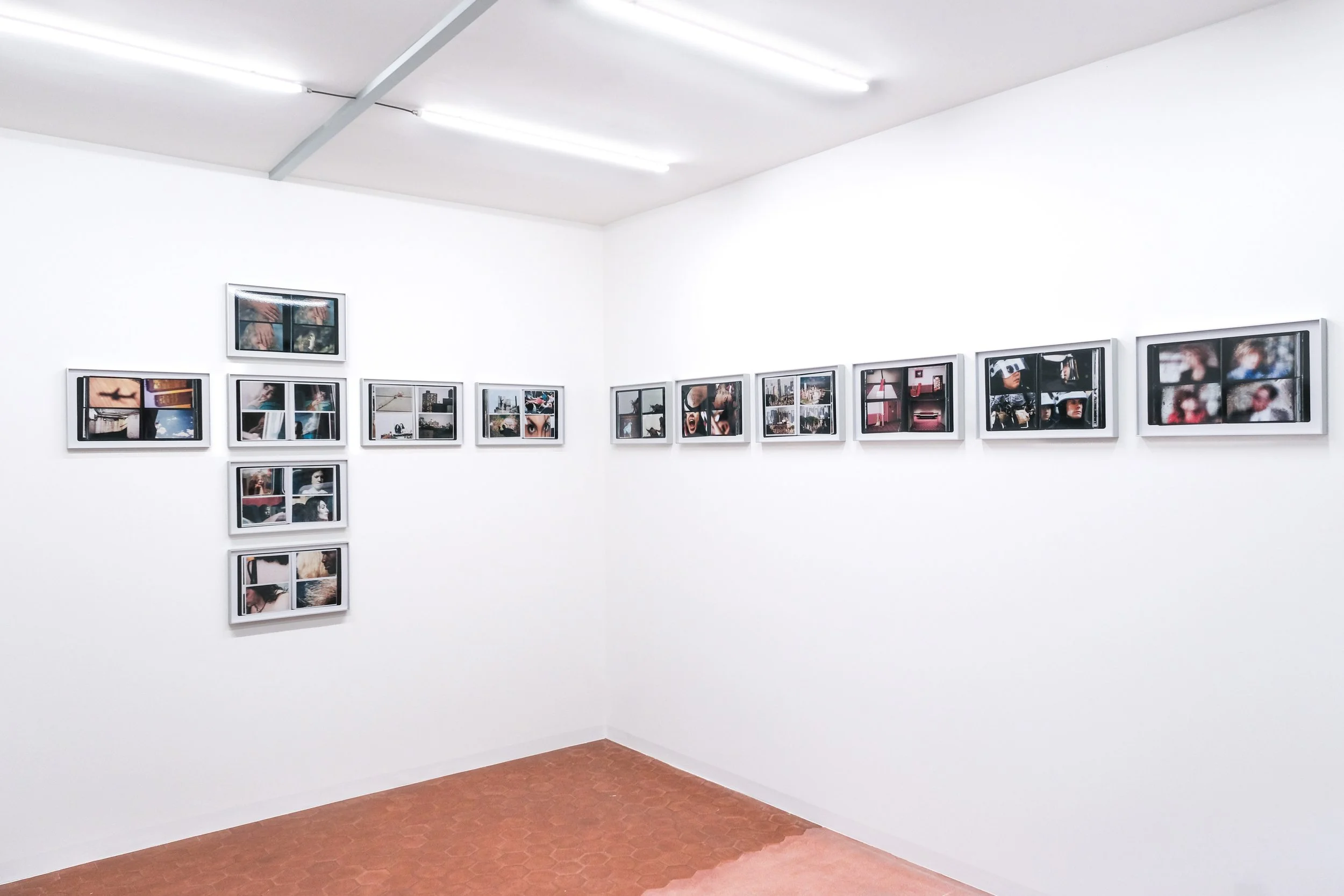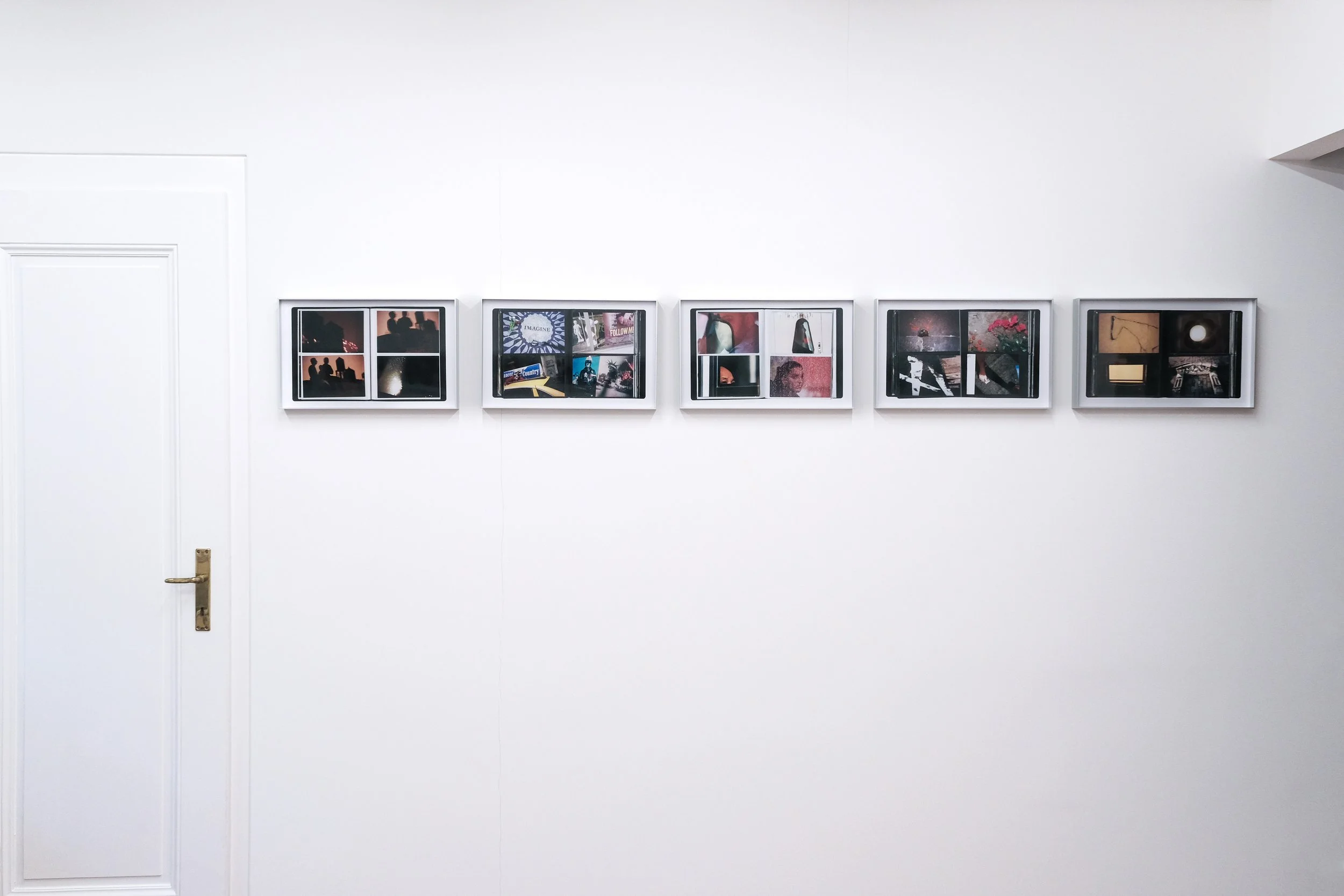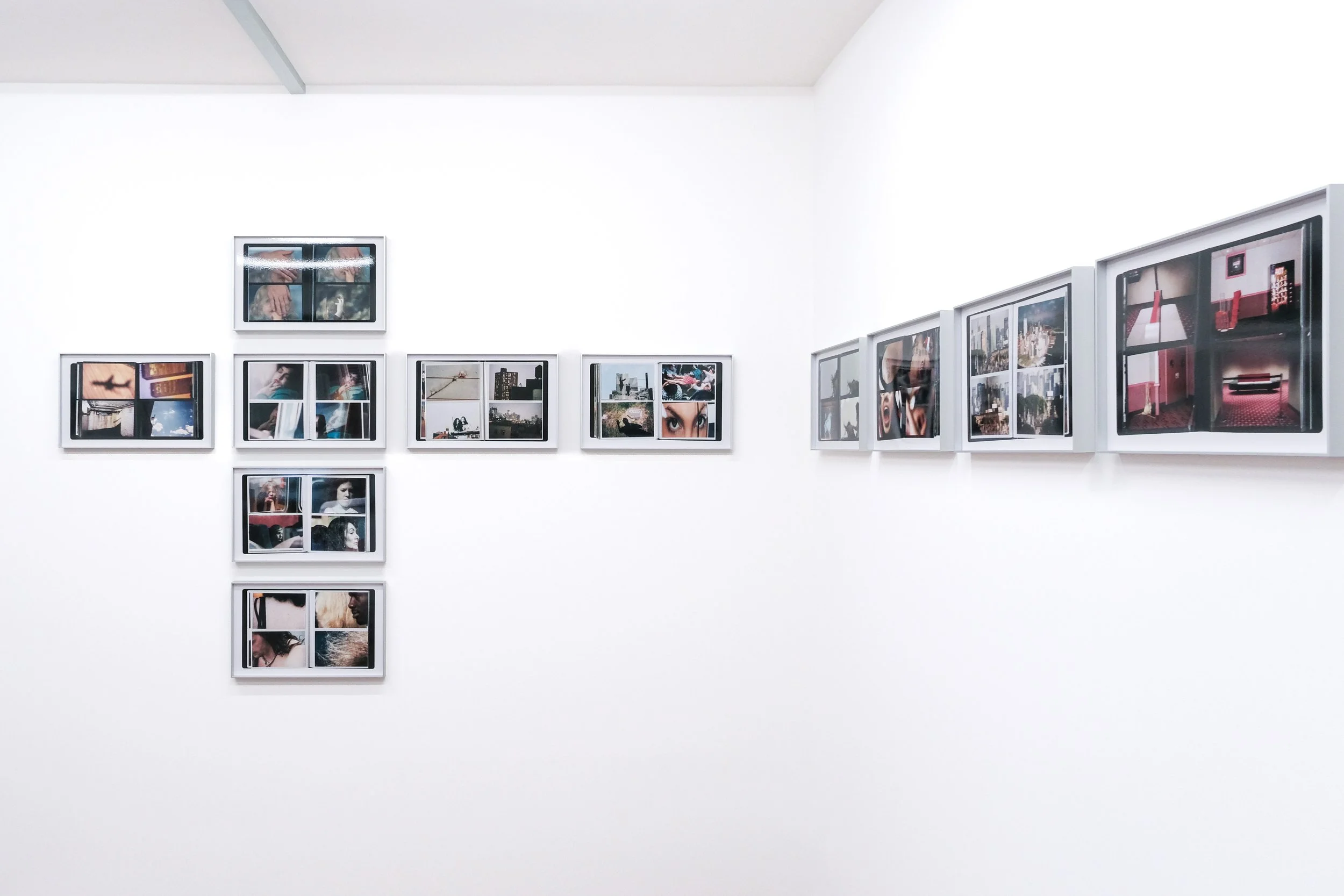
Carnets New-Yorkais is Jean-Christian Bourcart’s immersive and unfiltered plunge into the city where he lived for many years. When he first arrived in New York in the late 1990s, he earned his living producing corporate and show-business imagery—clean, polished photographs that, despite himself, contributed to the construction of a certain American dream whose real name is capitalism. Very quickly, the gap between this controlled image and the America experienced in everyday life pushed him to search for another way of looking.
Encouraged by the purchase of several of his prints by the Museum of Modern Art and driven by a kind of artistic survival instinct, Bourcart began practicing a form of anti-photography instinctive, raw, and wrested from reality. Using a small amateur camera, he photographed whatever surrounded him without premeditation: sidewalks, shop windows, crowds, parades, taxis, cinemas, traffic jams, underground clubs, slogans, the ruins of the World Trade Center; a world he moved through, absorbed, and questioned.
In Carnets New-Yorkais, New York is not represented; it is lived. The city appears shifting, porous, and contradictory. The photographs oscillate between documentary and hallucinatory visions, capturing fragments of the real: bodies in motion, fleeting encounters, moments of tenderness or violence, while allowing the unconscious to surface.
This body of work is rooted in a pivotal historical moment: the turn of the millennium, the September 11 attacks, the Iraq War, and the Subprime mortgage crisis. It would give rise to several major series including: Traffic, Forbidden City, and Stardust, which have since been widely exhibited and published. The complete set of albums, nearly a thousand contact sheets, remained in a basement for eighteen years before being rediscovered and entering the collection of the Nicéphore Niépce Museum.
With Carnets New-Yorkais, Bourcart continues his reflection on desire, solitude, and the shared human condition. The work rejects the idea of a fixed or iconic New York, revealing instead a city in constant metamorphosis, one that shapes, unsettles, and absorbs those who inhabit it. The hundred plates presented here, drawn from a corpus of more than a thousand, form a raw and sensitive visual notebook, deeply human, where the personal merges with the collective and where each image still seems ready to be rewritten.